Foil pressed.
Every card in the foil pressed collection is finished individually on our restored 1960s Heidelberg Windmill platen press. Foil blocking is a print process where metallic or pigmented foil is transferred to paper using heat and pressure — the result is a finish that can't be replicated digitally.
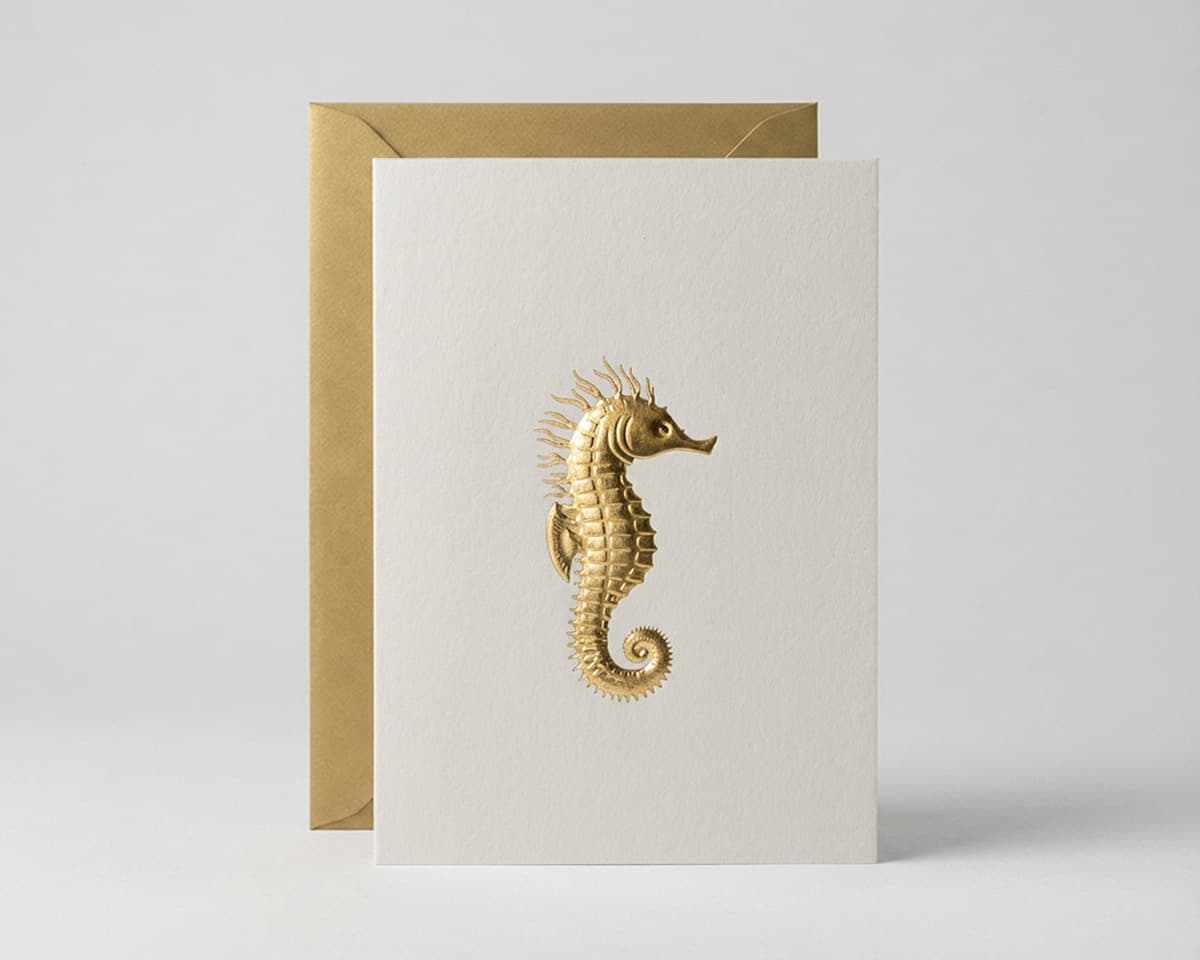
Three techniques
Most foil card suppliers offer one technique. We offer three, each with a distinct visual character.
Flat foil
A clean, solid metallic surface. Precise edges, high reflectivity. The most recognisable foil finish — works particularly well with typographic designs and bold graphics.
Sculpted foil embossing
The design is simultaneously foiled and embossed — raised from the paper surface, with the foil sitting on the relief. Creates a tactile, three-dimensional finish that catches light from different angles.
Textured microstructure foiling
A specialist die creates a fine texture within the foil surface — linear, hatched, or patterned. The texture is visible under direct light and gives the foil a depth that flat foil doesn’t have.
The press
Our Heidelberg Windmill 10×15 platen press was manufactured in the 1960s and has been fully restored. It runs at around 3,000 impressions per hour — slow by modern standards, but each impression is consistent and precise. The press is hand-fed, which means every card passes through human hands before it leaves the studio.
For your customers
Foil pressed cards sit at a higher price point than digitally printed alternatives, and customers can feel why. The finish is immediately distinctive — tactile, reflective, considered. They make strong gift card accompaniments and hold their own as standalone gifts.